Vuejs.amsterdam 2026: Key Takeaways from day Two
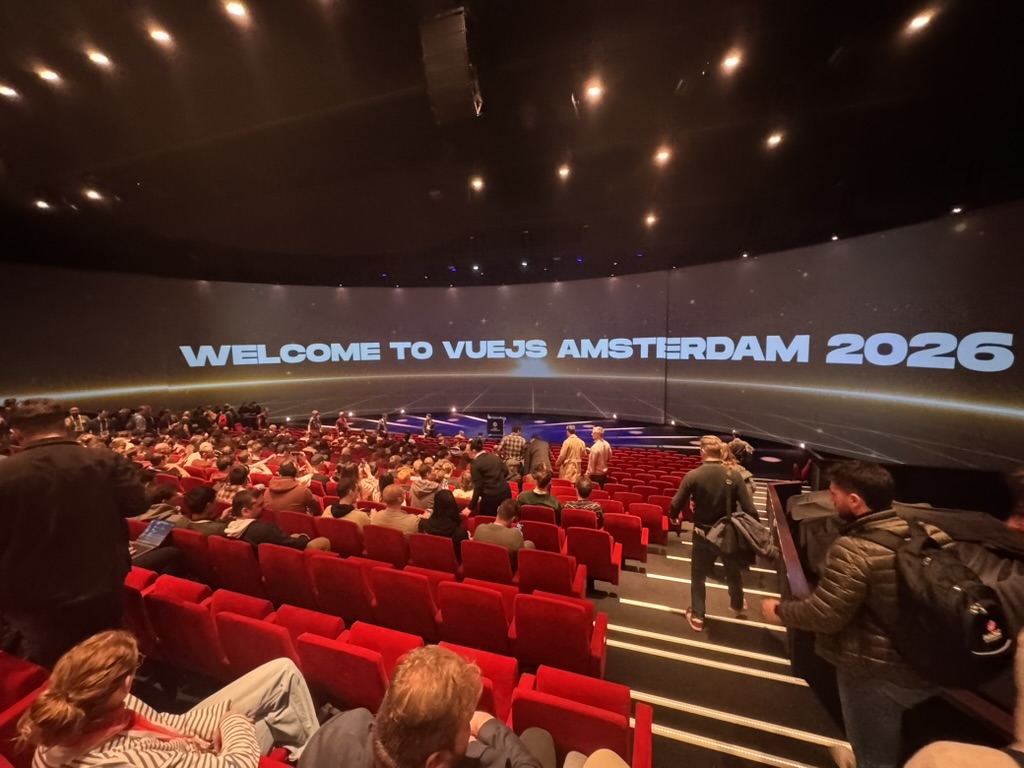
13 Mar 2026Day two at Vuejs.amsterdam continued the momentum with an equally impressive lineup of speakers diving into tooling evolution, accessibility, scaling experiences, and innovative architectural patterns. Here are the standout insights from day two.
🚀 The Future of Vue Tooling & Build Performance
-
Evan You Creator of Vue.
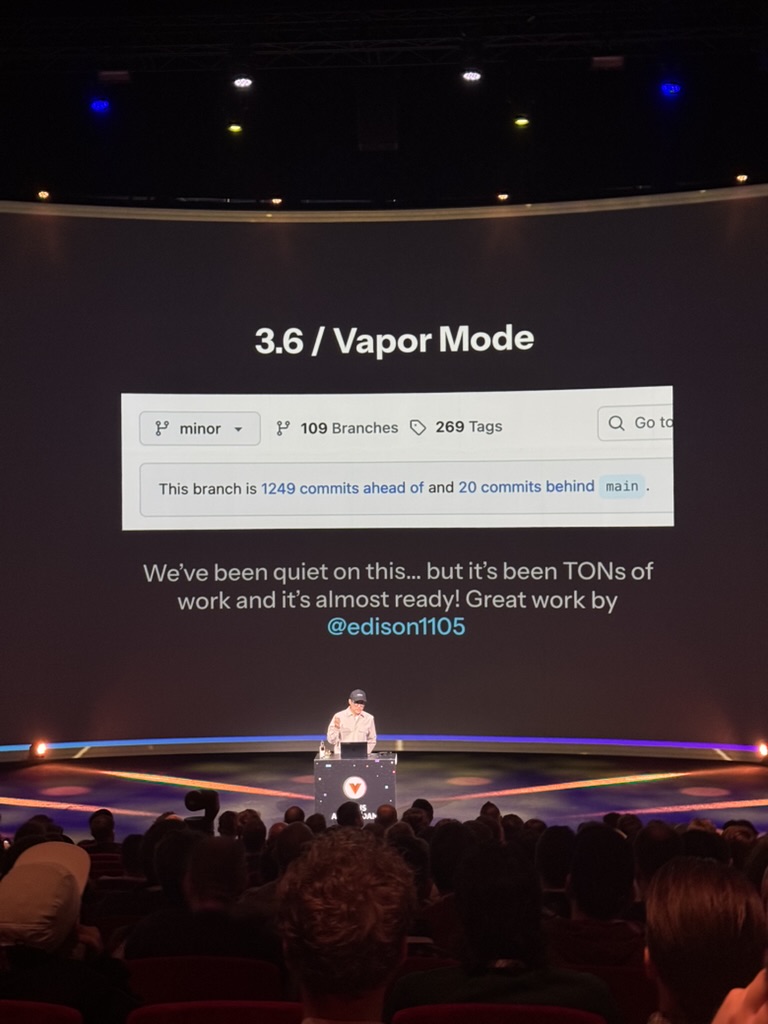
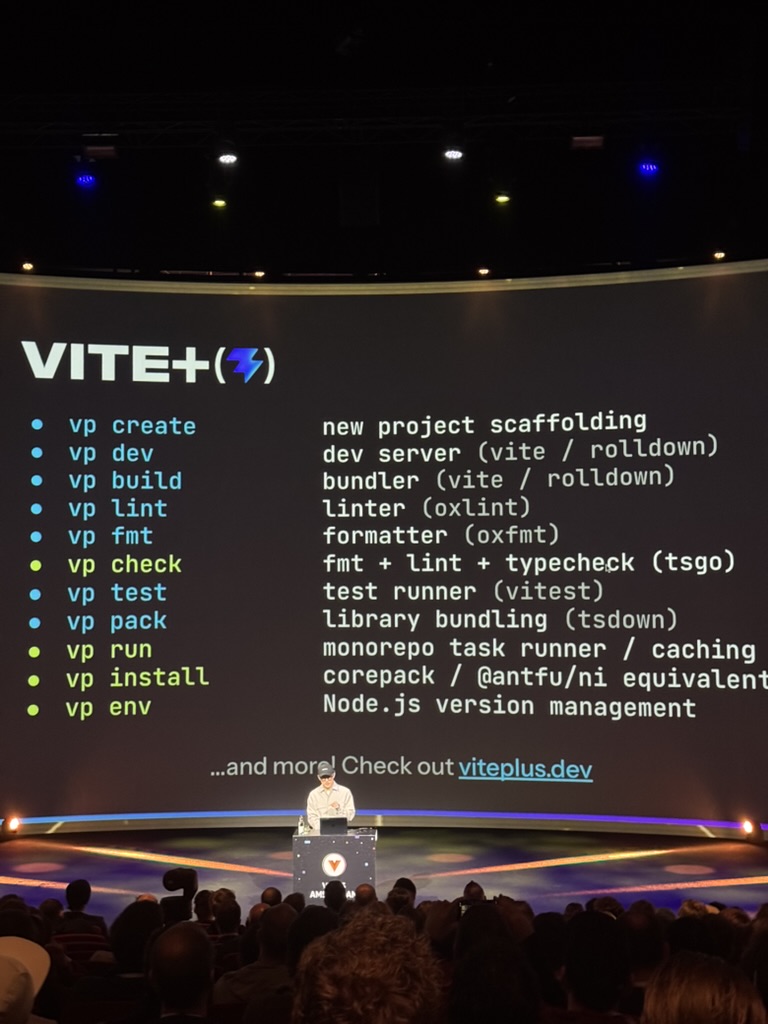
Speaking on Improving Vue Language Tools and the state of the ecosystem, Evan highlighted the launch of Vite 8 with significant performance gains. Notably, Rolldown (the Rust-based bundler replacement) delivers 5-30% faster build times. Game changer for larger projects.
He also introduced VitePlus, positioning Vue’s toolchain as a truly unified solution for modern web development. One tool to rule them all!
Evan’s talk was truly intensive with a lot of releases and new stuff to cover. -
Dragan Elijas.
With 7 years of Vue.js at scale, Dragan brought insights on maintaining large-scale Vue applications, emphasizing architectural patterns and team coordination strategies. -
Tim Benniks.
Explored performance optimization strategies, drawing parallels to “Need for Speed Rivals”. The key insight was the importance of consistent, predictable performance in modern applications. Presentation-wise, he delivered the A-game but maybe not too many takeaways.
♿ Accessibility: A Core Design Principle
- Julian Burr.
Focused on A11Y (Accessibility) as a gateway to Usability. Julian emphasized Dan Norman’s classic “The Design of Everyday Things,” arguing that accessibility isn’t a feature. Fundamental to great design. When you build for accessibility, you build for everyone.
I’ve added the book to my Reading List.
🏗️ Learning from Real-World Experience
- Louella Creemers, Microsoft MVP.
Shared “One Year of Vue.js Mistakes” a look at common pitfalls and lessons learned. Her insights bridged the gap between theory and practical development challenges.
📱 Local-First Architecture: The New Paradigm
- Alexander Opalic.
Introduced the concept of Local-First Software (based on the influential 2019 paper by Ink & Switch). Alexander explained how modern applications can prioritize offline-first capabilities using IndexedDB or SQLite as local data stores, with synchronization strategies like LWW (Last Write Wins) ensuring consistency. This shift enables better user experience, privacy, and resilience. He also made a great pitch for the Local First Conf 2026 in July, Berlin. Would be great to visit!
🎯 Bundle Analysis & Tree-Shaking Pitfalls
- Serko Vincent Ngai, based in Hong Kong.
Tackled a critical but often overlooked issue: When Tree-Shaking Fails. Serko explained how side effects in dependencies (likez.objects()) can prevent proper tree-shaking, inflating bundle sizes. He recommended tools like vite-bundle-analyzer to visualize and debug these issues before they hit production. Really enjoyed this talk from this great humble guy and it was his first visit in Europe.
🎨 Graphics & Web Interoperability
-
Ramona Schwering.
Presented “Let’s Draw Security” bringing attention to security considerations. Her whole presentation she drew with a pencil and gave a great visual representation of the domain and problem to solve. -
Jakob Schröter and Helian Riviera.
Showcased PixiJS integration with Vue.js, demonstrating how to port a huge legacy app in an agile manner to a future proof Vue.js application and describing a lot of hurdles they had to overcome.